hotel_classFEATURED ARTICLE
Dreams by Zodiac Sign: Astrology, Moon Phases and Science
Maybe you read that Pisces dreams more than any other sign. Maybe a friend told you that the full moon gives everyone strange dreams, and last night, under a full moon, you had a very strange dream. Now you want to know whether any of it is true.
Here is the short answer. Astrology gives people a symbolic language for their dreams, and many find it a useful way to ask themselves questions. The moon is a separate matter: some sleep studies found that people sleep a little less around the full moon, while other large studies found no effect. And we know of no study showing that your Sun sign changes what you dream about. This guide keeps three things apart: what the tradition says, what the evidence shows, and what you can do with your own dream.
Where the idea comes from
In ancient Mesopotamia, the stars and dreams were both read as messages from the gods. Scribes collected a great series of star omens, Enuma Anu Enlil, with about 7,000 omens on 70 clay tablets, and a book of dream omens on eleven tablets, Iškar Zaqīqu. Copies of both were kept at Nineveh in the seventh century BC, in the libraries of the Assyrian king Ashurbanipal. Our history of prophetic dreams across cultures follows the same belief through Egypt, Greece and beyond.
The moon has been linked with dreams for a long time too. Medieval European manuscripts, in Latin and in languages such as French and English, contain short texts that scholars call dream lunaries; the historian László Sándor Chardonnens has counted about 210 surviving copies. A dream lunary tells the reader whether, how and when a dream will come true, depending on which of the thirty days of the moon it came on. In one copy now in Cambridge, a dream on the second day of the moon "signifies joy", while a dream on the third day "signifies neither good nor evil".
Modern Western astrology has its own rules about dreams. In astrology the Moon stands for emotions, instincts, moods and memories. Neptune, a planet discovered only in 1846, is linked with fantasy and dreams, and astrologers made it the modern ruler of Pisces, which is one reason Pisces is called the dreamer of the zodiac. The twelfth house of a birth chart is said to rule the subconscious mind, dreams, intuition and secrets. These are symbolic associations inside astrology, not research findings.
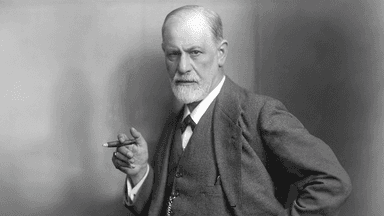
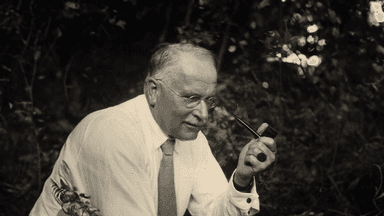
The most famous psychologist to take astrology seriously was Carl Jung. In 1911 he wrote to Sigmund Freud that astrology seemed indispensable for understanding mythology, and a month later that it was taking up most of his evenings. In his essay Synchronicity: An Acausal Connecting Principle (1952), he described a test on the horoscopes of 483 married couples, looking for the positions of Sun, Moon and rising sign that astrologers link with marriage. The first batch seemed to agree with the tradition; the later batches did not repeat the result. Jung did not present this as proof of astrology; he thought his own hopes had shaped the early result, and used it as an example of synchronicity, a meaningful coincidence. Our guide to Carl Jung's dream theory explains how he worked with symbols.
What each sign is said to dream about
Astrologers group the twelve signs into four elements. The fire signs (Aries, Leo, Sagittarius) are said to dream of action, the earth signs (Taurus, Virgo, Capricorn) of practical things, the air signs (Gemini, Libra, Aquarius) of people and ideas, and the water signs (Cancer, Scorpio, Pisces) of feelings and the unknown. Many astrologers add that your Sun sign (your "star sign") is only part of the picture: your Moon sign, the sign the Moon was in when you were born, is said to matter as much for dreams, or more.
The table sums up what popular astrology columns usually say. Read each row as a description from the tradition, not a fact about you. The dates are the usual Western (tropical) dates; they can move by a day from year to year.
| Sign | Usual dates | What astrologers say the sign dreams about | A question to ask yourself |
|---|---|---|---|
| Aries | 21 March to 19 April | Said to dream of action, competitions, leading a group, and conflicts that have to be faced. | Is there a conflict I am avoiding? |
| Taurus | 20 April to 20 May | Said to dream of nature, gardens, food and comfort. | What would help me feel safe right now? |
| Gemini | 21 May to 20 June | Said to dream of conversations, messages and journeys, and sometimes of losing their voice. | Is there something I need to say? |
| Cancer | 21 June to 22 July | Said to dream of home, family, the house they grew up in, and water. | Where do I feel at home, and do I have enough of that feeling? |
| Leo | 23 July to 22 August | Said to dream of stages, audiences and praise, and sometimes of failing in front of people. | Where do I want to be seen and appreciated? |
| Virgo | 23 August to 22 September | Said to dream of work, tidying and details, or of a mess that cannot be cleared up. | Which part of my life feels out of order? |
| Libra | 23 September to 22 October | Said to dream of relationships, weddings and beautiful places, and sometimes of arguments that spoil them. | Which relationship needs more balance or honesty? |
| Scorpio | 23 October to 21 November | Said to have intense dreams of secrets, endings, death and rebirth. | What is ending in my life, and what could begin after it? |
| Sagittarius | 22 November to 21 December | Said to dream of travel and adventure, or of being stuck and unable to leave. | Where do I feel limited? |
| Capricorn | 22 December to 19 January | Said to dream of work, success, climbing mountains, and the fear of failing. | Am I judging myself too hard? |
| Aquarius | 20 January to 18 February | Said to dream of groups, inventions and the future, and sometimes of feeling alone among many people. | Where do I feel like an outsider? |
| Pisces | 19 February to 20 March | Said to have vivid dreams of water, the sea, spiritual figures and strange places. | What am I feeling that I have not yet put into words? |
If your row fits, notice why. Most of these descriptions would fit many people on many nights, because almost everybody dreams about home, work, travel and other people. If your row does not fit at all, an astrologer would tell you to look at your Moon sign. A psychologist would tell you to look at your week.
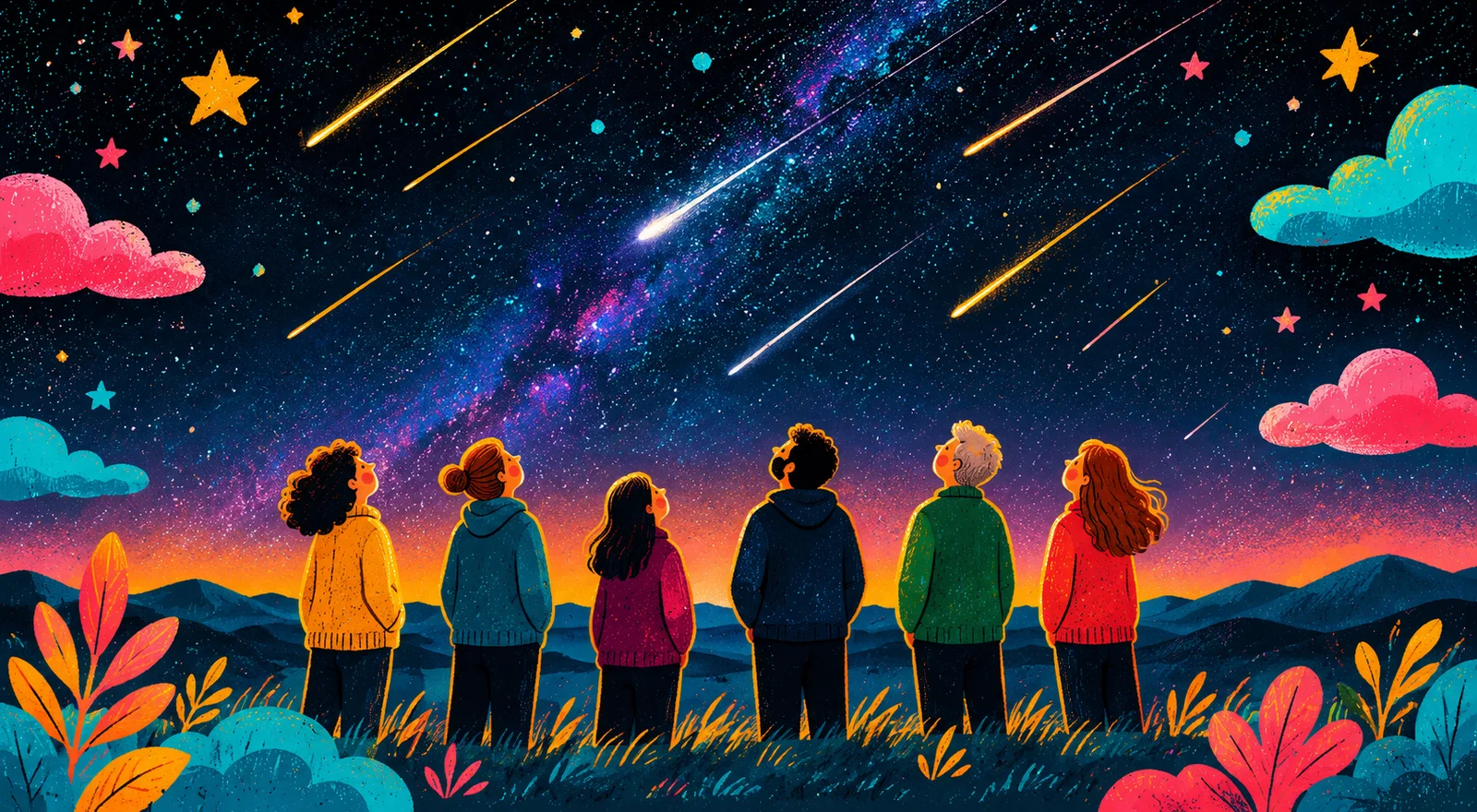
Does the moon change your dreams?
Here the answer from science is: perhaps a little, and mostly through sleep. In 2013 Christian Cajochen and colleagues at the University of Basel in Switzerland looked again at data from 33 volunteers who had slept in a laboratory without any time cues. Around the full moon, brain activity linked to deep sleep fell by about 30%. The volunteers took about five minutes longer to fall asleep, slept about 20 minutes less, said they slept worse, and had lower levels of melatonin, a hormone that helps control sleep timing. They could not see the moon and did not know its phase.
In 2021 a team led by Leandro Casiraghi and Horacio de la Iglesia tested the idea outside the laboratory. They gave wrist monitors to 98 people in three Toba/Qom Indigenous communities in northern Argentina, one of them without electricity, and also looked at sleep data from 464 university students in Seattle. People tended to go to bed later and sleep less in the three to five nights before the full moon, when the moon is already bright in the evening. The pattern appeared even in the city.
Other researchers found nothing. In 2014 Maren Cordi, Martin Dresler and colleagues combined sleep recordings from 1,265 volunteers over 2,097 nights and found no link between the moon and sleep. They also found unpublished studies with no effect, a sign of what scientists call the file drawer problem: studies that find nothing often stay unpublished. In 2015 José Haba-Rubio and colleagues recorded the sleep of 2,125 adults at home in Lausanne, Switzerland, and found no evidence of a significant effect of the moon. In short, the moon may shorten sleep a little for some people, but the effect is small and still debated.
What about the dreams themselves? In 2006 Michael Schredl and colleagues studied dream diaries that 196 people kept for 28 to 111 nights and found no link between the full moon and how many dreams people remembered. We could not find a good study showing that the moon changes what people dream about or how often they have nightmares.
There is still one possible link, and it depends on waking up. People remember dreams mainly when they wake during or just after REM sleep, the stage with the most vivid dreams. In 1957 William Dement and Nathaniel Kleitman woke sleepers in a laboratory and found that they described a dream after about four in five awakenings from REM sleep, and only rarely after other stages. So if a bright evening or a late bedtime makes your sleep lighter, you may wake more often and remember more dreams, even if the moon does not change the dreams at all.
The belief is much older than the studies. The English word "lunatic" comes from the Latin luna, moon, because people once believed that changes of the moon caused attacks of madness. In 1999 the psychiatrist Charles Raison and colleagues suggested one reason the belief lasted: before electric light, bright moonlit nights may really have taken away some of people's sleep.
What psychology finds
Researchers have also tested astrology directly. The best-known test was published in the journal Nature in 1985 by Shawn Carlson. Twenty-eight respected astrologers, nominated by an astrology organisation that helped make sure the test was fair, tried to match birth charts to the right personality profiles from a standard questionnaire, the California Psychological Inventory. Across more than 100 charts, they did no better than chance, and they were no more accurate when they felt most confident. Astrologers still argue about how the test was scored, but it remains the best-known controlled test of astrology.
Why, then, do sign descriptions feel so accurate? In a classroom experiment published in 1949, the psychologist Bertram Forer gave each of his students what he said was their personal result from a personality test. In fact, every student received the same text, put together from an astrology book sold at newsstands. Asked to rate how well it described them from 0 to 5, the students gave it an average above 4. This is now called the Barnum effect, or the Forer effect: people accept vague, flattering descriptions as personal, because almost anyone can find themselves in them.
What does shape your dreams is better understood. Dream researchers call it the continuity hypothesis: dreams mostly reflect waking life, especially the parts you feel strongly about. A 2003 diary study by Michael Schredl and Friedrich Hofmann found this continuity, although some activities, such as reading, rarely appear in dreams. Your relationships, your worries and the things you care about are what most dreams are made of.
Personality matters too. The psychiatrist Ernest Hartmann described people with "thin boundaries": sensitive, open, imaginative people who let feelings in easily. In his research, people with lifelong nightmares tended to have this kind of personality, and later studies linked thin boundaries with remembering more dreams. Our article on Ernest Hartmann's boundary theory explains the idea. Stress plays a part as well: worrying, sad or frightening situations can trigger nightmares, whatever your sign.
Put together, the evidence leads to one plain conclusion: your personality and your life shape your dreams; your birthday does not.
Spiritual readings: birthdays, new moons and full moons
Many people who follow astrology use it as a calendar for reflection rather than to predict events. People who read dreams through signs and synchronicities often pay attention to timing: a dream on your birthday, at a new moon or on a full moon is treated as a reason to stop and think, not as a message with a fixed meaning.
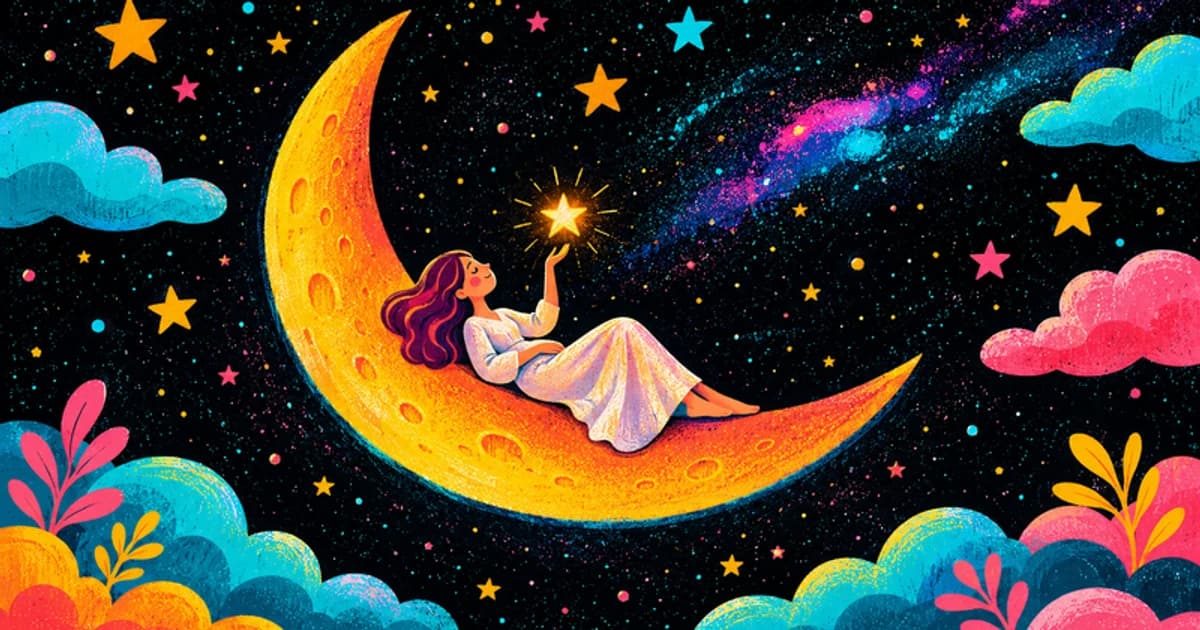
Some people keep a moon-phase dream journal. Spiritual writers usually describe the phases like this:
- New moon. A time for new beginnings and intentions. Before sleep, write down one thing you hope for, and see whether your dreams return to it.
- Waxing moon. A time of growth. Notice dreams about plans and things you are learning.
- Full moon. A time when things come to light, and for letting go of what you no longer need. Notice what your dreams show you clearly.
- Waning moon. A time to rest and reflect. Notice dreams about endings and recovery.
One rule keeps this practice healthy, and Ruya's Signs & Synchronicities method uses it for every tradition: a dream is an ordinary dream until it gives you a good reason to think otherwise. A dream that repeats, stays with you all day and matches something real in your life deserves more attention, whatever the moon was doing. None of Ruya's eleven methods reads your birth chart; this one looks at the dream and at what was happening in your life when it came. For dreams that seem to come true, see our guide to whether dreams can predict the future.
Discover Your Dream's Spiritual Message
Signs, synchronicities and energy — explore what your dream may be revealing on your spiritual path.
What Islam and Christianity say
Both faiths take dreams seriously, and both reject the idea that the stars can tell the future. This is a short summary of the mainstream view; for your own situation, ask a scholar or a pastor you trust.
In Islam, a true dream can be a gift from Allah, but claiming to know the unseen through the stars is not allowed. The Prophet Muhammad, peace be upon him, warned against going to fortune-tellers, and scholars apply this warning to astrologers and horoscopes.
He who visits a diviner ('Arraf) and asks him about anything, his prayers extending to forty nights will not be accepted.
Hadith reported by Safiyya from some of the wives of the Prophet, Sahih Muslim 2230 (Book 39, The Book of Greetings)
Muslim scholars separate two sciences. Astronomy (ilm al-falak), the study of how the sun, moon and stars move, has long been valued, partly because it is used to find prayer times and the direction of the qibla. Astrology (tanjim), which claims to read the unseen and the future from the stars, is forbidden. The Islamic calendar itself follows the moon; what is rejected is the belief that the stars decide events. Our guide to true dreams in Islam explains how dreams themselves are weighed.
The Bible treats dreams as one of the ways God can speak, and it treats reading the stars as something different. Deuteronomy 18:10-12 forbids anyone who "practices divination or sorcery, interprets omens". Isaiah speaks directly to the astrologers of Babylon:
Let your astrologers come forward, those stargazers who make predictions month by month, let them save you from what is coming upon you.
Isaiah 47:13, New International Version
The Christmas story is interesting here. In Matthew 2 the Magi say, "We saw his star when it rose and have come to worship him." Yet the warning that protects the family comes in a dream: the Magi are "warned in a dream not to go back to Herod" (Matthew 2:12). Most Christian teachers say a dream should be weighed against Scripture, not the zodiac, and the Catechism of the Catholic Church (paragraph 2116) lists consulting horoscopes and astrology among the forms of divination to be rejected. Our guide to biblical dream interpretation explains how believers test a dream.
What to do with your dream
Whatever you believe about the stars, these steps work in the same way for a sceptic and for a believer.
- Write it down the same morning. Note what happened, who was there and how you felt when you woke up. Our guide to remembering your dreams explains how to catch more of them.
- Try a two-month experiment. If you are curious about the moon, add the moon phase to each journal entry for two months. Then count: did you remember more dreams, or have more nightmares, around the full moon? It is a personal experiment, not a final answer.
- Use your sign as a question, never as a verdict. If the row for your sign feels true, answer the question next to it honestly. If it does not fit, ignore it.
- Protect your sleep around the full moon. Keep the bedroom dark and keep your usual bedtime and wake-up time. The volunteers in the Basel study could not see the moon at all, so dark curtains are good sleep advice, not a proven cure.
- Get help if nightmares continue. If you have nightmares more than once a week, or they affect your sleep, your mood or your daily life, talk to a doctor or a therapist.
Astrology offers a symbolic language and some useful questions. Sleep science says the moon may shorten sleep a little for some people, and has found no evidence that your birth date shapes what you dream. Psychology says your dreams come mostly from your life, your feelings and your personality. To understand your own dream, write it down in Ruya and look at it through the method that fits how you see dreams: cognitive, Jungian, Signs & Synchronicities, Christian or Islamic. Different viewpoints, one dream, and an answer that is yours.
Dreams and astrology: questions people ask
Which zodiac sign dreams the most?
Does the full moon cause weird dreams?
Does your moon sign affect your dreams?
Which zodiac signs have prophetic dreams?
Why do I remember more dreams during a full moon?
Is it a sin to read dreams by astrology?
Was this article helpful?