Freud's Dream Theory: Wish Fulfilment, Symbols and Method
In November 1899 a Viennese neurologist published a book claiming that every dream, however absurd, has a meaning that can be found. The Interpretation of Dreams sold only a few hundred copies in its first years, and then quietly rearranged the modern mind. Whether or not you accept a single sentence of Sigmund Freud's theory, you live in the world it made: we say things slipped out unconsciously, we suspect our dreams are about something other than what they show, and an entire industry of dream dictionaries still trades, mostly against his advice, on the idea of hidden symbols. This guide explains what Freud actually claimed about dreams, how his method worked, what a century of science kept and threw away, and how to put the useful parts to work on your own dreams.
Who Was Sigmund Freud?
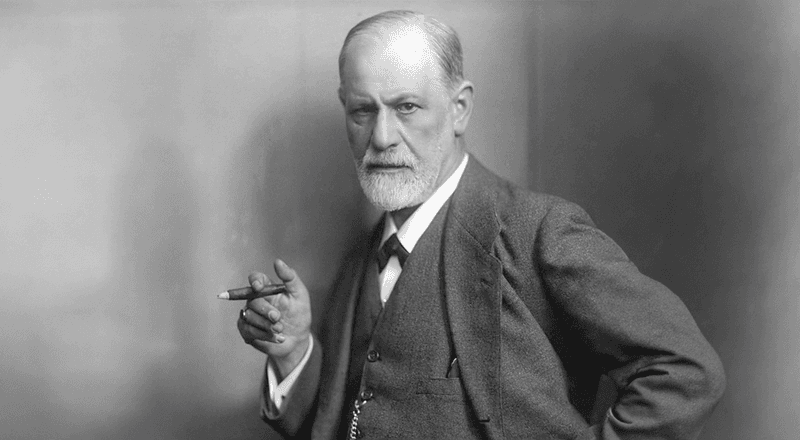
Sigmund Freud (1856-1939) was born in Freiberg in Moravia and spent nearly his whole life in Vienna, where he trained as a neurologist. A winter studying under the great Jean-Martin Charcot in Paris turned his attention from nerves to minds: Charcot was treating hysteria with hypnosis, and Freud came home convinced that symptoms could have meanings. With the physician Josef Breuer he developed the talking cure, then replaced hypnosis with a technique of his own, free association: the patient says whatever comes to mind, without censoring, and the hidden logic gradually surfaces.
Dreams entered the story through one of his own. In July 1895 Freud dreamt of a patient he calls Irma, examined the dream association by association, and became convinced it was doing something: excusing him, settling scores, fulfilling wishes he had not admitted to having. That analysis became the specimen dream of The Interpretation of Dreams, the book he always considered his most important. Fame, the couch, the psychoanalytic movement and the famous break with Carl Jung all followed. When the Nazis annexed Austria in 1938 he fled to London, where he died the following year, arguably the most influential and most disputed psychologist who ever lived.
The Theory: Every Dream Is a Wish in Disguise
Freud's claim is easy to state and radical to accept: a dream is the disguised fulfilment of a repressed wish. Desires we cannot admit to ourselves, because they are forbidden, embarrassing or simply incompatible with who we think we are, do not disappear; they wait for sleep, when the mind's guard is lighter, and press toward expression. But even asleep, a censor stands watch. The wish can only pass in costume, and the costume is the dream. This is why Freud distinguished the manifest content, the dream you remember and could retell at breakfast, from the latent content, the hidden thoughts and wishes behind it. The strange surface is not noise: it is a negotiated settlement between a wish and a censor, and he called dreams the guardians of sleep because the disguise lets us keep sleeping through material that would otherwise wake us.
The interpretation of dreams is the royal road to a knowledge of the unconscious activities of the mind.
Sigmund Freud, The Interpretation of Dreams
The Dream-Work: How the Mind Builds the Disguise
Freud gave a name, the dream-work, to the set of operations that transform hidden thoughts into the strange film you experience at night, and the vocabulary he invented for it is still one of the best descriptions anyone has written of how dreams feel from the inside:
| Mechanism | What it does | What it feels like in a dream |
|---|---|---|
| Condensation | Compresses several thoughts into one image | A person who is somehow your boss, your father and your dentist at once |
| Displacement | Moves the emotional charge onto something trivial | Weeping over a lost button while the burning house feels like nothing |
| Representability | Turns abstract thoughts into concrete pictures | "I feel exposed at work" becomes standing naked in the office |
| Secondary revision | Smooths the chaos into something like a story | The dream almost makes sense until you try to retell it |
| Day residue | Uses yesterday's scraps as raw material | This morning's email thread restaged in your childhood kitchen |
Freud's Method: Free Association, Not a Dictionary
It surprises people to learn that Freud's core method was not symbol lookup. On the couch, a dream was taken apart element by element, and for each element the dreamer said whatever came to mind, associations, memories, absurdities, until the trail led somewhere that mattered. Later editions of his book did add a chapter on typical symbols, and his popularisers turned that chapter into the dream dictionaries he never intended, but the working principle stayed personal: your dream, your associations, your meaning. A self-service version looks like this:
- Write the dream down immediately, in as much detail as you can. Freud treated the exact wording as evidence; odd phrasings are often doors.
- Break it into elements: each person, place, object and phrase gets its own line.
- Associate freely on each element. Write whatever comes, without judging relevance. The rule is total honesty on paper: the associations you want to skip are usually the ones doing the work.
- Find the day residue. What from the last day or two supplied the material? The trivial trigger often points at the non-trivial theme it got attached to.
- Ask the uncomfortable question. If this dream fulfilled some wish of mine, what would that wish be? You are free to reject the answer; Freud's bet is that the flinch itself is informative.

What Is Your Dream Telling You?
Explore your dream through psychological perspectives — from Jungian symbols and archetypes to your everyday thoughts and worries.
What Modern Science Kept, and What It Dropped
The scorecard after a century is genuinely mixed. Dropped: the universal claim. Dream research finds no evidence that every dream fulfils a wish, and Freud himself blinked first, conceding in 1920 that the repetitive nightmares of trauma survivors defy the formula. The fixed sexual symbolism his followers popularised fares even worse; modern researchers, like Freud on his better pages, insist that images take their meaning from the dreamer, not from a codebook. Kept: more than his critics expected. His day residue is an ancestor of today's continuity hypothesis, the well-supported finding that dreams recycle waking concerns. Experiments on thought suppression have shown a dream rebound effect: push a thought away during the day and it returns in your dreams at night, which is repression's ghost walking laboratory halls. And neuropsychology added a twist: dreaming depends on the brain's motivation circuits, not just its sleep machinery, meaning the engine of dreams runs closer to wanting than Freud's dismissers assumed. His deepest intuition, that dreams are meaningful, emotionally driven and worth attending to, is now the mainstream position.
As for the famous subject matter: Freud's name is welded to sexual dream symbolism in the popular imagination, largely through those dictionaries. If that is the question that brought you here, our guide to sex dreams treats it properly, across psychology and the spiritual and religious traditions.
Freud and Jung: The Famous Break
For a few years Carl Jung was Freud's chosen heir, and dreams ended the succession. Freud held that dreams disguise; Jung became convinced they reveal, speaking plainly in an older language of images, and that the unconscious holds more than repressed personal material. The friendship broke around 1913 and psychology got two rival maps of the night, which is a gift for the rest of us: some dreams answer better to Freud's question, what am I not admitting, and others to Jung's, what is trying to balance me. Keeping both questions in your pocket beats swearing loyalty to either man.
Ask the Freudian Questions of Your Own Dreams
Freud's method runs on raw material: the dream captured verbatim before breakfast edits it, and an honest record of what your days contained. That is a dream journal, and it is exactly what Ruya is built around: capture by voice or text the moment you wake, and let the record accumulate. When you want to dig, the interpretation methods take up the work in Freud's spirit without the couch: the Thoughts and Worries method traces a dream back to the waking concerns and day residue feeding it, and the other methods are there when a dream calls for a different lens entirely.
Freud got important things wrong, and he got one enormous thing right before anyone else would say it in public: the strange theatre of the night is about you, produced by you, and worth your attention. A century of science has trimmed his theory and kept his subject. The royal road is still open; it just has more lanes than he drew.
Freud and Dreams: Frequently Asked Questions
What is Freud's dream theory in simple terms?
What are manifest and latent content?
What is the dream-work?
Are all dreams wish fulfilment? What about nightmares?
What did Freud mean by the royal road to the unconscious?
How is Freud different from Jung on dreams?
Did Freud really say "sometimes a cigar is just a cigar"?
Is Freud's dream theory still valid today?
Was this article helpful?