Ibn Sirin Dream Interpretation: Method, Symbols and the Famous Book
Dream of a snake and you will probably wake up uneasy. Dream of rain, a garden or the Prophet, and you may wonder whether something good is on the way. For more than thirteen centuries, Muslims asking these questions have turned to one name above all others: Muhammad Ibn Sirin. This guide looks at who he really was, how his method of Islamic dream interpretation works, what the most common symbols mean in the tradition that carries his name, and the surprising truth about the famous book sold under it.
Who Was Muhammad Ibn Sirin?
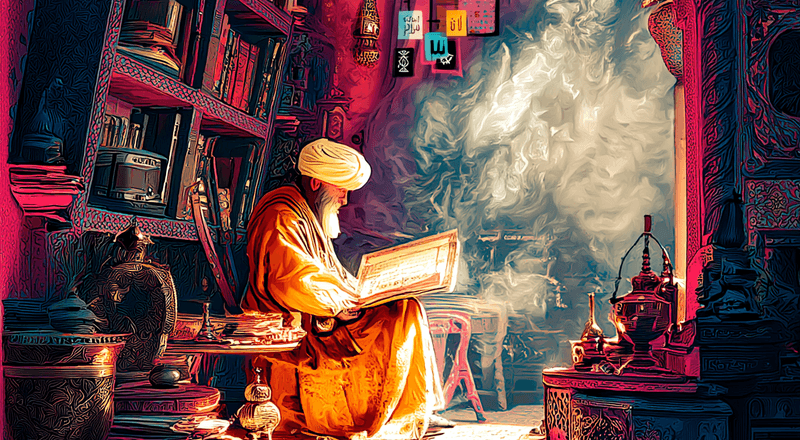
Muhammad Ibn Sirin was born in Basra, in present-day Iraq, around 33 AH (about 654 CE), in the generation that followed the companions of the Prophet Muhammad (the tabi’un). His father, Sirin, was a captive freed after the early Muslim conquests who became a client (mawla) of Anas ibn Malik, the Prophet’s famous servant and companion. Growing up in that household placed the young Muhammad at the heart of early Islamic learning: he studied under Anas ibn Malik, Abu Hurairah and other companions, and became a respected transmitter of hadith whose narrations appear in the collections of al-Bukhari and Muslim.
Ibn Sirin earned his living as a cloth merchant, and his reputation for honesty became legendary; he is said to have accepted imprisonment over a debt rather than profit from a transaction he doubted. His sister Hafsa bint Sirin was herself a noted scholar of the Qur’an and hadith. When he died in Basra in 110 AH (729 CE), he was mourned as one of the most trusted scholars of his generation, remembered for piety, precision and a famously sharp wit.
The Most Famous Dream Interpreter in Islam
Among his contemporaries, Ibn Sirin’s gift for ta’bir al-ru’ya (dream interpretation) set him apart. Yet the stories preserved about him show a careful, almost reluctant interpreter. He questioned dreamers about their circumstances before offering a word, gave different answers to different people who reported the very same dream, and often declined to interpret at all when he was unsure. For him, interpreting a dream was closer to giving a religious ruling than to reading a fortune, and it deserved the same caution.
How Did Ibn Sirin Interpret Dreams? His Method
The method preserved in his name rests on a few consistent principles rather than a fixed dictionary of meanings:
- Symbols rooted in the Qur’an and Sunnah: a symbol’s meaning is sought first in scripture. Water can point to knowledge or life, rain to mercy, a garden to good deeds and Paradise. The same image is read through the language of revelation before anything else.
- The dreamer’s context: the same dream does not mean the same thing for a ruler and a merchant, or for a worried parent and a student. The interpreter asks about the dreamer’s work, health, worries and faith before answering, because meaning shifts with circumstance.
- Caution and honesty: a dream is interpreted only when the signs are clear. If they are not, the honest answer is silence. Classical interpreters treated a careless interpretation as a real harm, not a harmless guess.
The Three Types of Dreams in Islam
Islamic dream interpretation begins with a famous hadith recorded in Sahih Muslim, in which the Prophet Muhammad (peace be upon him) explained that dreams are of three kinds:
- Ru’ya (true dreams): good and truthful dreams that come from Allah. They tend to be clear, calm and memorable, and the hadith describes them as glad tidings.
- Hulm (bad dreams): disturbing dreams from Shaytan, meant to frighten or sadden the dreamer. They carry no authority over the future and are not interpreted.
- Hadith an-nafs (the self talking): ordinary dreams produced by daily thoughts, memories and worries. Most dreams belong here, and the tradition treats them as echoes of the day rather than messages.
Another well-known hadith describes the truthful dream of a righteous person as one of the forty-six parts of prophethood. Classical scholars drew a practical lesson from these texts: take good dreams as encouragement, dismiss frightening ones, and do not treat every dream as a message that demands decoding.
The good dream is from Allah, and the bad dream is from Satan. So whoever sees something he dislikes, let him seek refuge with Allah from its evil, and it will not harm him.
Prophet Muhammad (peace be upon him), Sahih al-Bukhari
Tafsir al-Ahlam: Did Ibn Sirin Really Write the Famous Book?
Walk into any Islamic bookshop and you will find dream dictionaries with Ibn Sirin’s name on the cover: Tafsir al-Ahlam, Muntakhab al-Kalam fi Tafsir al-Ahlam, the Great Book of Interpretation of Dreams, and countless translations of them. These books have shaped how millions of Muslims think about dreams, and they remain the most quoted works in the field.
Historians of Islamic literature, however, agree that Ibn Sirin did not write them. Al-Dhahabi noted that the circulating texts mention people and events from after Ibn Sirin’s death, and Ibn al-Qayyim stated plainly that no authentic book of dream interpretation from him survives. The most famous compilations bearing his name were assembled centuries later from a long chain of interpreters working in his tradition. None of this erases his importance: his recorded interpretations, passed on by his students, became the foundation those later books were built on. It simply means the honest phrase is ‘the tradition attributed to Ibn Sirin’ rather than ‘Ibn Sirin’s book’.
Common Dream Symbols in the Ibn Sirin Tradition
The classical corpus attributed to Ibn Sirin reads the most frequently asked-about symbols roughly as follows. Remember the first rule of the method: context changes everything, so treat these as starting points rather than verdicts.
- Snakes: a hidden enemy or hostility. The snake’s size and behaviour hint at the scale of the threat, while escaping it or killing it suggests overcoming the enemy.
- Gold and silver: surprisingly, gold is often read as a warning for men, hinting at a fine, a loss or a burden, while silver generally points to honest wealth and provision.
- A deceased person: often read as news of their state, or of your bond with them. Receiving something from the dead suggests goodness or provision coming to you; giving them something can signal loss.
- Marriage: a new responsibility, commitment or change of status, read according to who the partner is and the dreamer’s situation.
- Pregnancy: increase. For the dreamer it typically points to growth in wealth, work or worldly affairs.
- Rain: general, gentle rain is mercy, relief and blessing. Rain that falls on one place only, or that destroys, is read as trial or hardship.
- Lions: a powerful adversary or an authority figure. How you face the lion matters more than the lion itself.
- Dogs: usually a weak or ignoble enemy; a barking dog is an insult from someone unworthy of a reply, while a loyal guard dog can stand for a protective friend.
- Dates: sweet, lawful provision (rizq). Eating good dates points to halal earnings and the sweetness of faith.
- Seeing the Prophet Muhammad (peace be upon him): the tradition holds, on the strength of hadith, that Shaytan cannot take the Prophet’s form, so such a dream is counted a truthful vision and a great glad tiding.
Islamic Dream Interpretation
Wondering what your dream means in Islamic tradition? Share your dream and receive a thoughtful interpretation rooted in Islamic sources.
What to Do After a Good or a Bad Dream
The Sunnah gives simple, practical etiquette for both kinds of dream, and the Ibn Sirin tradition repeats it constantly:
- After a good dream: praise and thank Allah, take it as quiet encouragement, and share it only with people you love and trust.
- After a bad dream: seek refuge with Allah from its evil, dry-spit lightly three times to your left, turn onto your other side, and tell no one. The hadith is explicit that a dream handled this way will not harm you, and a bad dream is never interpreted.
Ibn Sirin’s Legacy Today
Thirteen centuries on, Ibn Sirin remains the first name people reach for when a dream unsettles or delights them, from Basra to Istanbul to Dar es Salaam. The books that carry his name are still bestsellers, and his method, symbols read through scripture and weighed against the dreamer’s life, still defines Islamic dream interpretation.
That method is also why careful questions still matter more than dictionary look-ups. It is the approach Ruya follows in its Islamic dream interpretation: you record your dream in your journal, answer a few questions about your life and circumstances, exactly as Ibn Sirin would have asked, and receive an interpretation grounded in the classical tradition. Ancient method, modern companion.
Frequently Asked Questions About Ibn Sirin
Who was Ibn Sirin?
Did Ibn Sirin really write Tafsir al-Ahlam?
What are the three types of dreams in Islam?
How did Ibn Sirin interpret dreams?
What does dreaming of a snake mean in Islam?
What should I do after a bad dream in Islam?
Can I get an Ibn Sirin style dream interpretation online?
Was this article helpful?